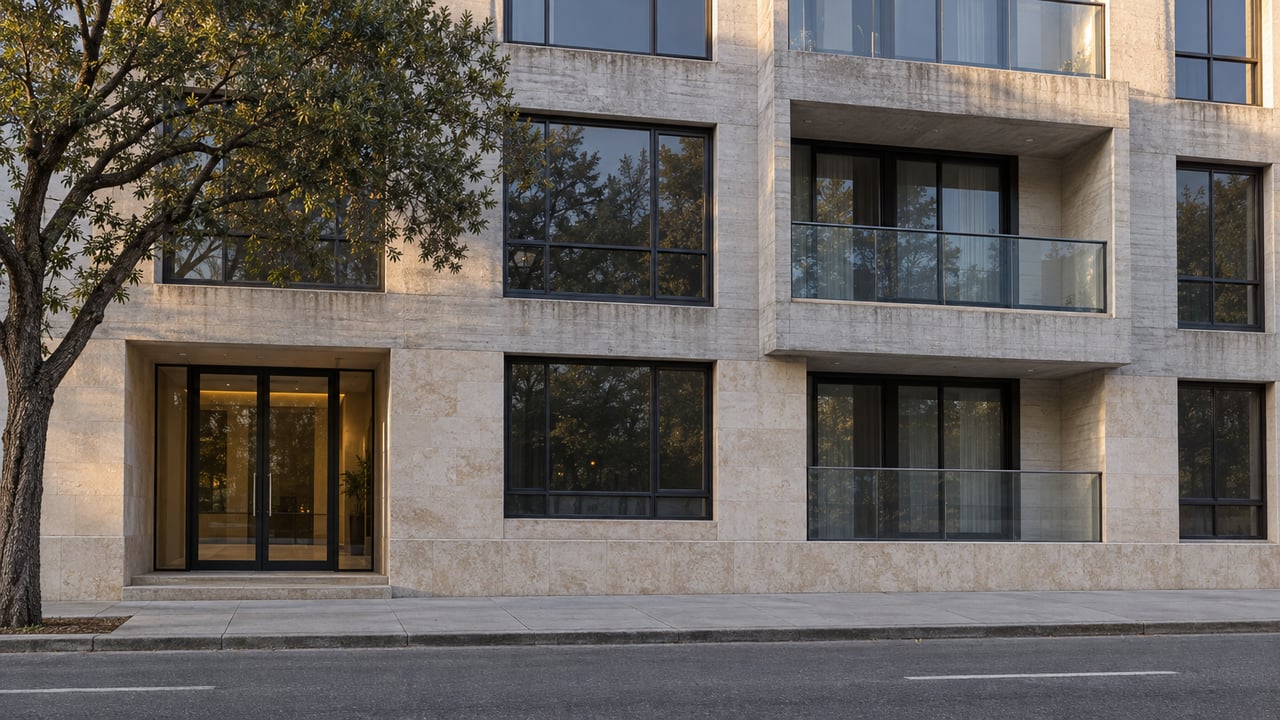
West Campus Rents Skipped Most of Austin's Crash, and That Changes the Condo Math
October 1, 2026
October 1, 2026
Every fall, a version of the same pitch circulates among parents of incoming UT students. Buy a one or two bedroom condo in West Campus, let a roommate or two cover part of the mortgage through rent, and sell when your student walks across the stage. One mortgage lender's breakdown of the math puts the avoided cost at $60,000 to $90,000 in rent over a four year degree, money that would otherwise disappear into someone else's bank account. It is a clean story, and it has been true often enough that it keeps getting repeated.
It is also being told at a strange moment for Austin rents generally. Since the 2021 peak, median rent across the metro has fallen as much as 16 to 20 percent, the result of roughly 120,000 new housing units added between 2015 and 2024, a pace more than three times the national rate. Vacancy climbed into the 13 to 14 percent range earlier this year, and landlords across the city have been offering months of free rent just to fill units. If you are a parent running the numbers on whether your student's roommates will reliably cover their share of a mortgage, this is the backdrop you are running them against, and it is not a backdrop that inspires confidence in guaranteed rental income.
Except West Campus has not behaved like the rest of Austin's apartment market, and the reason is specific enough to name.
Since 2004, the blocks immediately around campus have operated under the University Neighborhood Overlay, a density bonus program that lets developers build taller in exchange for affordability contributions or fees paid into the city's housing trust fund. The program has produced a genuinely dense supply of purpose-built student housing, and a 2023 City of Austin Housing Department case study found something the citywide rent crash headlines miss: construction under UNO kept West Campus rents comparatively stable even as the rest of the city swung from acute shortage to oversupply.
The mechanism is not complicated once you see it. UNO ties new supply to a specific, steady source of demand, students enrolling at a university that now counts more than 53,000 students, rather than to the general apartment-hunting population that swells and shrinks with tech hiring cycles and remote work trends. A tower built to house students gets filled by students. It does not sit competing with luxury units downtown or single family rentals in the suburbs. That narrower lane is exactly what insulated the submarket from the citywide swing.
This matters directly for the parent-investor pitch. The rental income a roommate provides is not exposed to the same forces that pushed vacancy to a decade high everywhere else in Austin. It is exposed to a different, narrower question: how much new UNO-driven supply is still coming, and how fast.
The city has spent more than a year debating whether to let UNO go further. A 2025 proposal would raise height limits in the district closest to campus to as much as 600 feet, taller than the 515 foot Frost Bank Tower and nearly twice the height of the 307 foot UT Tower itself. City Council was scheduled to vote on it in June 2025, postponed to give university leadership more time to weigh in, then postponed again to September after student government leaders asked for delay, citing unanswered questions about affordability and neighborhood impact. As of an April 2026 report from the Daily Texan, the item had not returned to City Hall or the Planning Commission since that September delay, and the University had not weighed back in.
Here is what makes that stall interesting rather than just bureaucratic trivia: developers are not waiting for it to resolve. Under the existing 300 foot cap, projects keep moving forward:
Two additional towers over 400 feet were approved on West Martin Luther King Jr. Boulevard in spring 2026, on a site the Judges Hill Neighborhood Association flagged for decades of dry cleaning contamination underneath it. The developer says the project is not planned as student housing, though the city council member representing the district argued students would benefit regardless through added retail and public space nearby.
None of this requires the 600 foot rezoning to pass. It is happening under rules already on the books, which means the supply pipeline into West Campus keeps expanding whether or not the political fight over height limits ever resolves.
For a parent or grandparent evaluating a specific condo purchase, the practical question splits into two pieces that don't move together.
The first is whether student rental demand holds up. It does, structurally, as long as enrollment near 53,000 continues and campus housing keeps covering only a fraction of that population. The second is whether a new tower two blocks away undercuts the specific unit you're buying within a three or four year hold, and that question depends entirely on which building you're looking at and how close it sits to the next construction site.
Resale pricing data reflects some of this uncertainty already. One trailing twelve month closed-sale figure for West Campus condos sits close to $293,000, down from the prior year, while current asking prices for units on the market cluster nearer $325,000. A separate portal shows units sitting on market for roughly four months before selling. That gap between what sellers are asking and what buyers have actually been paying is a sign the list-price side of the market has not fully caught up to a buyer's market, not evidence that either number is wrong. It is a reason to pull comps for the specific building rather than trust a single neighborhood-wide average, because a 2005 walk-up condo and a 2019 amenity tower with a rooftop pool get folded into the same median even though they behave nothing alike as investments.
Building age also changes the mortgage math directly through HOA dues. Older walk-up buildings from the 1970s through the 1990s tend to carry lower monthly HOA fees, often in the low hundreds. Newer luxury towers with concierge service, fitness centers, and resort-style pools run several times higher. Every dollar of that fee is a dollar the roommate's rent has to cover before it touches principal, so two condos at the same purchase price can produce very different monthly cash flow depending on what decade the building went up.
The citywide rent crash headlines are real, and they describe a genuine oversupply working its way through Austin's apartment market. They are also, for a West Campus condo buyer, mostly describing a different market. UNO's built-in matching of supply to student demand has held rents here steadier than the rest of the city, and that pattern predates the current oversupply story by two decades.
What hasn't been settled is how much more supply lands in these specific blocks over the next several years, since the political fight over just how tall that supply gets to be has been sitting unresolved since last September. A buyer weighing a specific unit is really weighing proximity to the next filing, not the citywide vacancy rate.
If you're looking at a specific West Campus building for a student purchase, Tangela Bailey can pull the actual comps for that building and check what's filed or under construction nearby before you commit. Request a personalized valuation on the property you're considering.
Stay up to date on the latest real estate trends.
Partnering with Tangela, I bring clients a well-rounded real estate experience built on collaboration, knowledge, and care. Together, we combine our strengths to guide buyers, sellers, and investors with confidence and clarity, making each step of the process seamless and rewarding.